
Who Still Has Keys to Your Building? Why It’s Time to Rethink Access Control in the Upper Valley
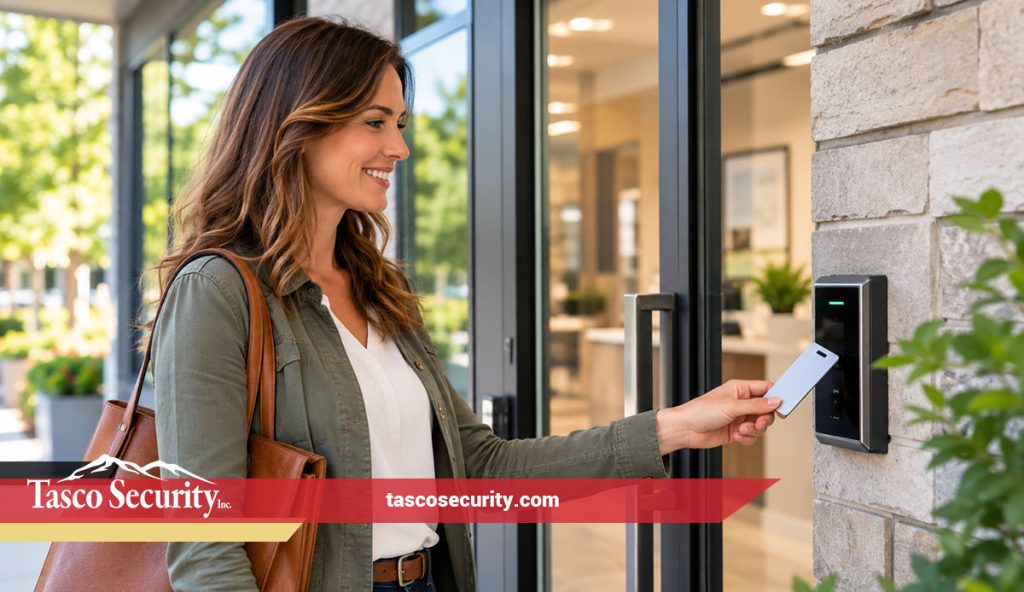
The Question Most Business Owners Can’t Answer
If you’re like many business owners in the Upper Valley, there’s a simple question that may not have a clear answer:
Who still has keys to your building?
Over time, keys are handed out for convenience—employees, former staff, contractors, vendors. Some are returned. Many are not. And unlike digital systems, physical keys don’t come with a tracking system or expiration date.
“If you don’t know exactly who has access to your building, your security is already compromised.”
Spring is a natural reset point for businesses. Staffing changes, operational shifts, and increased activity make it the perfect time to take a closer look at who can enter your property—and whether that access still makes sense.
The Hidden Risk of Physical Keys
Keys feel simple and familiar, which is exactly why they’re often overlooked as a security risk. But that simplicity comes at a cost.
A single lost or unreturned key can:
- Allow unauthorized access without your knowledge
- Be copied without permission
- Remain in circulation indefinitely
Unlike digital systems, there’s no easy way to deactivate a key once it’s out there. The only real solution is rekeying or replacing locks—an expensive and time-consuming process.
“A key doesn’t just open a door—it opens the possibility for risk that you can’t easily control.”
Why Spring Is the Right Time to Audit Access
Seasonal transitions bring change. In the Upper Valley, spring often means:
- Hiring new employees
- Letting go of seasonal or temporary staff
- Bringing in contractors for maintenance or upgrades
Each of these changes impacts who should—and should not—have access to your building.
Without a structured process, access permissions quickly become outdated. A former employee who still has a key may not pose an immediate threat, but the potential risk remains.
Taking the time now to audit access ensures your security aligns with your current operations—not past ones.
Moving Beyond Keys with Access Control
Modern access control systems eliminate the uncertainty that comes with physical keys. Instead of relying on something that can be lost or copied, businesses use credentials that are fully manageable.
These can include:
- Keycards or fobs
- Mobile-based access
- PIN codes assigned to individual users
The advantage is control. Access can be granted, adjusted, or revoked instantly—without changing locks or collecting physical keys.
Real-Time Visibility and Accountability
One of the biggest benefits of access control is visibility. You’re no longer guessing who entered your building—you know.
With a modern system, you can:
- Track entry and exit activity
- Assign access based on roles or schedules
- Receive alerts for unusual activity
This creates accountability across your organization and helps identify potential issues before they escalate.
For additional insights into how access control improves business security, organizations like ASIS International highlight its role in modern risk management strategies.
Remote Control for Modern Businesses
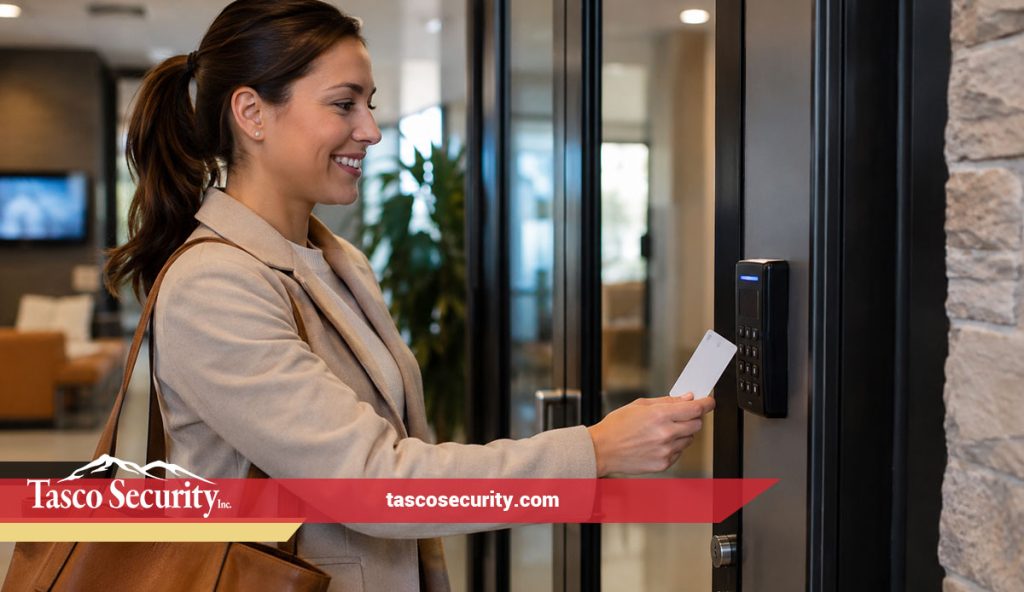
In today’s environment, business owners are not always on-site. Whether managing multiple locations or traveling, the ability to control access remotely is a major advantage.
With mobile-enabled access control, you can:
- Unlock doors for authorized individuals from anywhere
- Add or remove users instantly
- Monitor activity in real time
This flexibility is especially valuable in the Upper Valley, where businesses may operate across multiple buildings or rural properties.
Reducing Long-Term Risk
The biggest issue with keys is that they create long-term exposure. Even if there’s no immediate problem, the risk remains as long as those keys are unaccounted for.
Access control eliminates that uncertainty. Permissions are tied to individuals, not objects, and can be adjusted as your business evolves.
This ensures that your security system grows with your business instead of becoming outdated.
FAQ
What should I do if I don’t know who has keys?
Start with an access audit. Identify current employees and review who should have access. From there, consider transitioning to a controlled system.
Is access control expensive to implement?
Many systems are scalable, allowing you to start small and expand over time.
Can I still use keys alongside access control?
Yes, hybrid systems are common, but digital control provides greater security and flexibility.
How quickly can access be changed?
Instantly. Permissions can be updated in real time through a centralized system.
Take Back Control of Your Building

If you’re unsure who still has access to your building, you’re not alone—but it’s a problem that can’t be ignored. Taking control of access is one of the most effective ways to improve your overall security.
Contact Tasco Security today for a complimentary consultation and discover how access control can give you complete confidence in your building security.

- Why More Upper Valley Families Are Choosing Professionally Monitored Alarm Systems - June 21, 2026
- How Much Does a Home Security System Cost in New Hampshire? A Homeowner’s Guide (2026) - June 14, 2026
- The Complete Guide to Home Security Systems in the Upper Valley of New Hampshire (2026) - June 7, 2026